dod-solicits-feedback-on-proposed-rule-on-public-access-to-research-results

DOD Solicits Feedback on Proposed Rule on Public Access to Research Results

The Department of Defense has started acccepting insights on a proposed rule that seeks to make good on a Government Accountability Office recommendation regarding DOD-funded fundamental research.

According to a Federal Register notice published Thursday, GAO recommended that the Pentagon initiate steps to increase public access to results and data of federally-funded research.

The proposed rule, which was introduced as an amendment to the Defense Federal Acquisition Regulation Supplement, would require contractors to submit final peer-reviewed manuscripts to the Defense Technical Information Center’s publicly accessible repository.

The policy would also direct vendors that secured research and development contracts to implement and maintain a data management plan throughout the contract’s duration.

Comments are due Nov. 25.

states,-tribes-get-$1.5b-in-federal-grants-to-fight-the-opioid-epidemic

States, tribes get $1.5B in federal grants to fight the opioid epidemic

State and tribal governments will receive more than $1.5 billion in federal funds to combat the opioid crisis, the U.S. Substance Abuse and Mental Health Services Administration announced Thursday.

The announcement comes as nationwide overdose rates dipped for the first time since 2020, dropping 10% from April 2023 to April 2024, according to federal data. It’s a welcome sign of progress to federal, state and local governments.

“This [data] tells us that we must remain focused on addressing the overdose epidemic and saving lives, and we must continue to build a village that supports individuals struggling with substance use disorder and their families,” said Miriam Delphin-Rittmon, SAMHSA administrator and assistant secretary for mental health and substance use at the U.S. Department of Health and Human Services, on a call with reporters Thursday.

While the reasons for the decline of drug-related deaths is hard to pinpoint, public health experts have pointed to governments’ efforts to increase the availability of medications to treat substance use disorders and overdoses, public health initiatives like treatment programs and increased outreach, and awareness efforts to educate the public on the dangers of drugs like opioids. 

Most of the new federal funds—$1.49 billion—will support states’ mitigation efforts like increasing residents’ access to medications for opioid use disorder through, for example, mobile clinics or telehealth services. The remaining funds are allocated for tribal governments and technical assistance for grant recipients to carry out their opioid response programs.

Many of the awardees focus on teens and young adults. The New Hampshire Department of Health and Human Services, for instance, will use $29 million in federal funds for substance use preventative messaging and education initiatives targeting teens and young adults, building its opioid response workforce development efforts and offering those seeking treatment services like childcare and transportation, according to the SAMHSA grant dashboard. The department aims to service more than 6,300 people through September 2029.

States can also use funds to expand or improve their addiction prevention, treatment and recovery strategies, such as installing public health vending machines or distributing naloxone, an opioid overdose reversal medicine.  

Having naloxone available in public settings like schools or government housing facilities is a significant part of addressing the opioid crisis, Delphin-Rittmon said, to ensure people who use opioids or who are around others using the substance have quick access to the life-saving medicine. She pointed to Michigan’s syringe service program, which distributed nearly 69,000 naloxone units and fentanyl test strips in fiscal year 2022 with the help of state opioid program grants. As a result, Delphin-Rittmon said the state saw at least 2,241 overdose reversals statewide.

Under the grant program, tribal programs will receive $63 million to mitigate opioid overdoses and substance use disorders. The funds will also help increase tribes’ access to medications for opioid use disorders and support addiction prevention and treatment.

Tribal communities have higher rates of overdose deaths than any other racial or ethnic group in the U.S. In 2022, non-Hispanic American Indian and Alaskan Native people died from overdoses at more than five times the rate of other Americans.

In Tulare County, California, the Tule River Indian Health Center is planning to use $250 million in federal funds over the next five years to hire a Tule River tribal member with lived experience with opioid use disorders to work as a peer recovery specialist in the community. The specialist, according to the SAMHSA grant announcement, will serve as a mentor to support individuals through their treatment and recovery journeys.

The health center will also use the grant funds to hire a substance abuse counselor who will assess clients’ eligibility for substance use disorder medications, develop treatment plans and provide counseling services.

An additional $18.5 million will support training and technical assistance services. For the next three years, the Opioid Response Network will help grant awardees improve community outreach efforts, address stigma among opioid response workers and explore evidence-based strategies to reduce opioid use and overdoses, among other efforts.

The funds will be distributed through SAMHSA’s tribal opioid response program and state opioid response programs, which launched in 2018. Between September 2021 and September 2022, the grants helped more than 177,000 people receive treatment for an opioid use disorder and another 480,000 people receive recovery support services, according to a SAMHSA statement.

Previous grantees reported “less depression, less anxiety, fewer suicide attempts and increased abstinence from alcohol and drug use” among individuals served by state and tribal opioid response programs, Andrea Palm, deputy secretary of the U.S. Department of Health and Human Services, said Thursday. The grant-funded programs have helped people with substance use disorders obtain stable housing, build social connections and seek educational opportunities.

“We are so appreciative of the work being done around the country using [tribal and state opioid response] funds,” Delphin-Rittmon said. “Losing one life is too many.”

winning-companies-announced-for-inaugural-aukus-ew-challenge

Winning Companies Announced for Inaugural AUKUS EW Challenge

The defense chiefs of the United States, Australia and the United Kingdom have announced the winning companies of the first AUKUS Electronic Warfare Challenge.

Launched in March, the competition aimed to identify electromagnetic spectrum solutions to give AUKUS nations a strategic advantage in targeting and defending against adversarial EW capabilities, the Defense Innovation Unit said Thursday.

The DIU, Australia’s Advanced Strategic Capabilities Accelerator and the U.K.’s Defence and Security Accelerator held the challenge to advance AUKUS Pillar II, which seeks to develop new EW technologies to bolster global security.

Secretary of Defense Lloyd Austin, Australian Minister for Defence Richard Marles and UK Secretary of State for Defence John Healey revealed the competition during their recent meeting in London.

Austin, a three-time Wash100 Award recipient, identified the U.S. winner as Distributed Spectrum, which received $150,000 for its radio frequency sensing platform, which provides real-time intelligence on adversary activity.

According to Distributed Spectrum CEO Alex Wulff, the contest inspired the development and deployment of an attritable sensing capability to monitor the Indo-Pacific region.

The tech competition attracted 173 companies from across the United States, Australia and the United Kingdom, highlighting the AUKUS countries’ strong defense innovation bases.

POC - GovCon International Summit

On Oct. 10, the GovCon International Summit brings together government and industry speakers from across the globe to discuss how international partnerships, coalition warfare and emerging technologies are reshaping the defense landscape. Register now to attend the event!

va-offers-veterans-nationwide-access-to-emergency-telehealth-care

VA offers veterans nationwide access to emergency telehealth care

The Department of Veterans Affairs announced on Thursday that veterans across the country who are enrolled in VA care can now receive virtual emergency assessments to determine the severity of medical afflictions.

The new tele-emergency care — or tele-EC — service is designed to connect retired servicemembers with clinical triage nurses, who can then evaluate their symptoms and determine if they require in-person aid. 

“Veterans can get immediate, virtual triage with a VA medical provider who has direct access to their medical records,” VA Under Secretary for Health Shereef Elnahal said about the new service. “This avoids having to potentially drive to the nearest emergency department and wait to be evaluated, if appropriate.”

Veterans can access the tele-EC service by contacting VA Health Connect — which provides veterans 24/7 access to medical personnel for a variety of healthcare needs — or through the department’s VA Health Chat app. 

In a press release, VA said the resource is not meant to replace hospital visits or physical healthcare checkups but noted that “for veterans in rural areas or those with mobility and transportation challenges, in-person immediate care can be difficult to access.”

VA said it decided to provide nationwide access to tele-EC after it piloted the service in recent months and found that it has “shown promise for veterans.”

The department said early use of the service provided support for 61,182 callers, with 59.4% of those veterans’ needs resolved without them needing to receive in-person urgent care. 

army-surpasses-recruit-goal-for-fy-2024

Army Surpasses Recruit Goal for FY 2024

The Army has surpassed its 55,000 recruit goal for the fiscal year 2024 marking the first time in two years, MilitaryTimes reported Thursday. 

The transformation of the Army’s recruiting efforts—including adding dedicated enlisted and warrant officer job positions, extending recruiter training by two weeks and using artificial intelligence to help organize prospective recruit data—ultimately helped the service meet its goal.

Christine Wormuth, secretary of the Army and a 2024 Wash100 awardee, said, “Our goal was 55,000 new contracts and 5,000 young people in our delayed entry program. We exceeded that goal of 55,000 by a few hundred, and we put 11,000 young people into the delayed entry program, which is going to give our recruiters a really strong jumping-off point to start towards our recruiting target for next year.”

The Army is currently modernizing its facilitation of various commands. For instance, the service is adding a digital dashboard of crucial recruiting metrics and reportedly moving as many as 40 physical locations to alternative areas to garner recruit interest. The service has also introduced the Future Soldier Prep Course, a pre-basic training program that helps prospective recruits reach physical and academic standards within 90 days.

Although the service has reached its annual recruiting goal, Wormuth emphasized an estimated drop of 10 percent in the number of college-age recruits nationwide in 2026, which is a top concern.

“The headwinds that we’ve been facing are not going to stop blowing,” Wormuth said.

“I think we’re going to probably continue to see pretty low unemployment. We’re still going to see 60% go to college. It’s a more competitive labor market. So we’re going to have to kind of keep fighting hard for our new recruits,” Wormuth added.

The Army has pursued 55,000 new enlistment contracts this year and another 5,000 for the delayed entry program to ship to basic training. Wormuth said recruiters already have 11,000 individuals in the delayed entry program headed to training for fiscal year 2025. 

house-dems-reintroduce-bill-to-expand-va-health-care-employees’-union-rights

House Dems reintroduce bill to expand VA health care employees’ union rights

More than 100 House lawmakers on Wednesday reintroduced legislation that would grant health care workers at the Veterans Affairs Department with full federal sector collective bargaining rights.

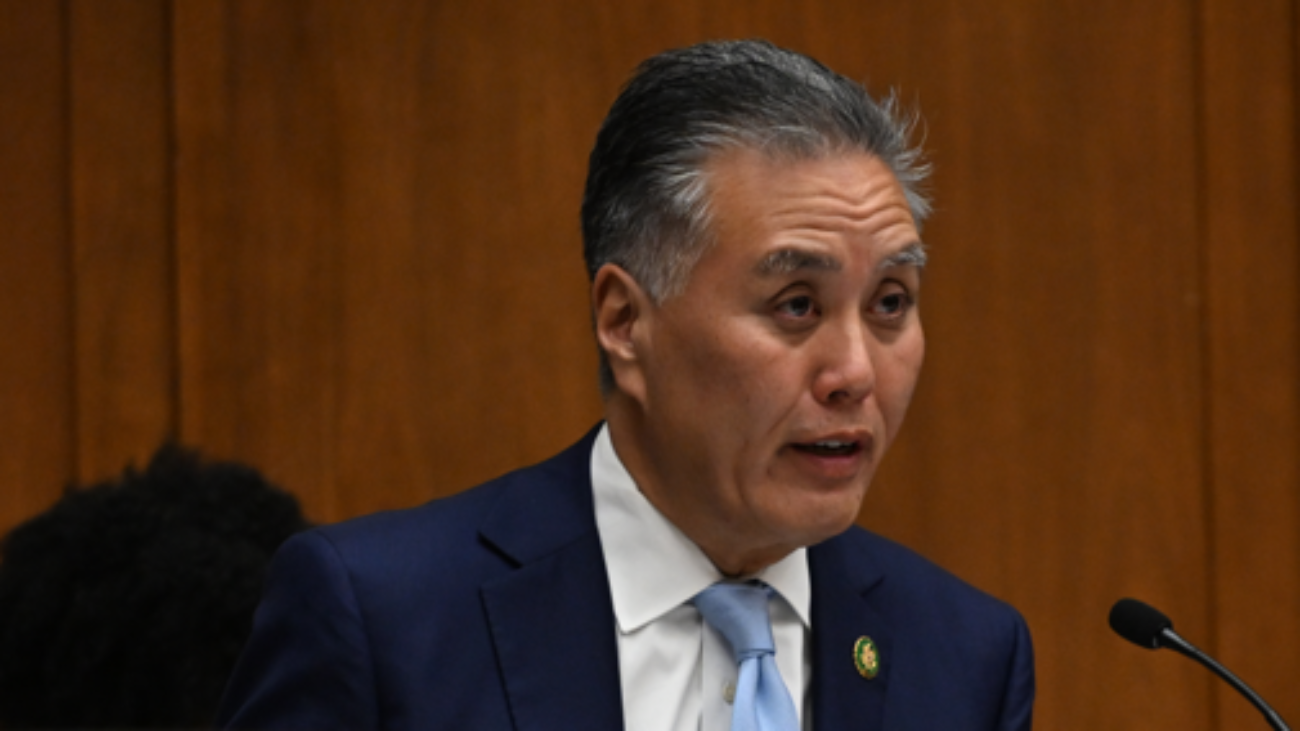
The VA Employees Fairness Act (H.R. 9855), introduced by Rep. Mark Takano, D-Calif., would remove additional guard rails placed upon unions representing VA doctors, nurses and other health care workers, who are hired under Title 38 of the U.S. Code. Most federal workers are hired under Title 5.

Currently, Title 38 restricts VA health care workers’ ability to bargain over issues related to compensation, peer review and matters of professional conduct or competence. Though Title 5 employees also cannot bargain over pay, the law governing VA clinicians hampers some unions from negotiating over issues like scheduling or rectifying payroll errors.

Additionally, past administrations who were hostile to labor have interpreted Title 38’s restrictions to have a much broader scope than Democrats and unions say was intended by its authors. During the Trump administration, the VA controversially banned official time—the practice by which union officials who also serve as federal employees are compensated for their time spent on representational matters, such as representing an employee during disciplinary proceedings or negotiating with management—for Title 38 employees, arguing that the practice impacted “direct patient care.”

“VA health care workers work tirelessly to provide high-quality care to our nation’s veterans and their families,” Takano said in a statement. “This bill would grant these essential workers the collective bargaining rights that they deserve and have been fighting for, as well as help VA improve employee retention. This is the right thing to do.”

Leaders of unions that represent VA workers quickly endorsed the measure’s reintroduction.

“For decades, our union has sounded the alarm about how the lack of collective bargaining rights and fair working conditions has driven thousands of VA health care providers, a third of whom are veterans themselves, to the private sector,” said Alma Lee, president of the American Federation of Government Employee’s VA Council. “On behalf of the 304,000 VA employees our union represents, 75,000 of whom would be impacted by this law, we applaud Rep. Takano for introducing critical legislation that provides voice to those who work day and night to provide the highest quality of care to our nation’s veterans.”

“Health care providers across the federal government are afforded collective bargaining rights, except for those caring for our nation’s veterans,” said National Federation of Federal Employees President Randy Erwin. “The dedicated nurses, physicians, physician assistants, dentists and other clinicians serving within the VA deserve the ability to collectively bargain on key topics as it relates to fulfilling their critical mission of providing the very highest standard of care. VA professional clinicians must have the opportunity to bring issues affecting veterans’ health care to the bargaining table for discussion.”

But with just three months left in the congressional session—and all of October marked off for the legislature’s pre-election recess—the bill stands little chance of passing this year, particularly given the GOP’s control of the House. Among the bill’s 104 cosponsors are only two Republicans: Rep. Don Bacon, R-Neb., and Guam’s non-voting Congressman James Moylan.

nitrd-releases-rfi-on-cyber-physical-systems-resilience

NITRD Releases RFI on Cyber-Physical Systems Resilience

The Networking and Information Technology Research and Development is seeking public input to inform a plan being developed to shape a whole-of-government research and development approach related to cyber-physical resilience of local, regional or national systems.

According to a request for information issued on Thursday, NITRD will accept responses until Oct. 26 to support the creation of the plan scheduled to be released in 2025.

The RFI cited a report from the President’s Council of Advisors on Science and Technology, titled Strategy for Cyber-Physical Resilience: Fortifying Our Critical Infrastructure for a Digital World, defining cyber-physical systems as technologies that rely on computing technologies for sensing, analysis, tracking, controls, connectivity, coordination and human-system interaction.

It also referred to the National Climate Resilience Framework defining resilience as the ability to prepare for threats and hazards, adapt to changing conditions, and withstand and recover rapidly from adverse conditions and disruptions.

NITRD said respondents may provide alternate definitions if cyber-physical systems have a different meaning in their industry or field.

36%-of-new-irs-hires-faced-delays-due-to-technical-and-security-clearance-jams

36% of new IRS hires faced delays due to technical and security clearance jams

Buoyed by money from the 2022 Inflation Reduction Act, the IRS brought on nearly 53,000 new employees in fiscal years 2022 and 2023. 

Most of the new employees for those fiscal years were hired within the agency’s 80-calendar day time to hire target — about 33,800, or 64%. But the Treasury Inspector General for Tax Administration analyzed the 36%, nearly 19,000, that weren’t hired within the goal time frame and determined that workload constraints and miscommunication, held up security checks and limitations in IRS’ hiring management system all contributed to the delayed hirings. 

“Delays in the hiring process can put the IRS at risk of wasting resources due to losing prospective employees because the applicants who experience a prolonged hiring process may opt for alternative employment opportunities,” investigators wrote. 

TIGTA found that HR specialists took an average of 44 days, 29 more than the target, to review external applications, and officials who select candidates spent an average of 28 days, 13 more than the goal, to return their selections to the IRS Human Capital Office. Investigators blamed the missed targets on inadequate training, in particular. 

Additionally, TIGTA investigators noted that many reference materials were outdated, including the IRS’ hiring manual that hasn’t been modified since fiscal 2010. 

Out of the new employees whose hiring took more than 80 days, investigators used 106 of them to create a statistically valid stratified random sample. Almost all of the individuals within that sample who required a security check exceeded the 10-day target for completion by an average of 40 days. TIGTA pinpointed that getting fingerprints from applicants significantly contributed to these delays. 

Investigators also found shortcomings with the IRS hiring management system. For example, HR specialists have to manually enter a lot of data and there are not common unique identifiers, which can become a significant issue when two job candidates have the same name. 

TIGTA recommended that IRS:

  • Create a plan to improve training, communication and coordination between hiring representatives and HR specialists throughout the hiring process to reduce delays. 
  • Develop up-to-date reference materials on hiring. 
  • Alert applicants to upcoming deadlines with respect to the fingerprinting process. 
  • Request from the Office of Personnel Management additional automation enhancements for its hiring management system. 

In a letter accompanying the report, IRS agreed with each of the recommendations and said it has already taken steps to address them. 

The tax agency’s workforce at the end of fiscal 2023 was at approximately 89,800 employees, an increase from the about 80,200 workers in fiscal 2020 but still less than the 94,300 employees it had in fiscal 2010.

navigating-the-continuing-resolution-2024:-what-government-contractors-need-to-know

Navigating the Continuing Resolution 2024: What Government Contractors Need to Know

Government contractors, you know the drill. Each year, it seems we face the same uncertainty as the fiscal year draws to a close — will there be a government shutdown, or will Congress pass a continuing resolution, or CR, to keep the lights on? For 2024, we find ourselves in the middle of this familiar scenario once again. In this article, we’ll break down everything contractors need to know about the Continuing Resolution of 2024, its implications and how to prepare for the weeks ahead.

Will There Be a Government Shutdown?

The question on everyone’s mind is — will the government shut down? The short answer is: no, not right now. Congress passed a stopgap funding bill on Sep. 25, which means the government will remain operational until Dec. 20. This CR temporarily avoids a shutdown, but it’s essential to understand that this is a short-term solution. The threat of a shutdown still looms if Congress cannot agree on a long-term funding plan after the Presidential election on Nov. 5.

The implications of a government shutdown can be severe for contractors. Projects may come to a halt, payments can be delayed and employees might face furloughs. However, with the CR in place, government operations, including contracts, will continue without interruption for now. This temporary relief gives contractors some breathing room but underscores the importance of staying prepared for any eventuality.

What Is a Continuing Resolution?

A continuing resolution is legislation that allows federal agencies to continue operating at current funding levels for a set period, buying Congress more time to agree on a full-year budget. In essence, it’s a financial Band-Aid that keeps the government running.

CRs are not new; they have been a recurring feature in U.S. budget policy. They help avoid the disruptive and costly effects of a government shutdown, but they also come with limitations. Under a CR, no new programs can start, and existing programs cannot expand their budgets. This status quo approach can limit a contractor’s ability to plan and execute long-term projects effectively.

For government contractors, understanding the nuances of a CR is crucial. It means maintaining flexibility and being ready to adapt to funding changes once a full-year budget is passed. Contracts may be extended or modified, and timely communication with contracting officers becomes essential to ensure smooth operations.

How Often Does Congress Pass a CR?

In short: quite often! According to the Congressional Research Service, Congress has enacted one or more CRs in all but three fiscal years since 1977. 1997 was the last fiscal year in which a CR was not needed or passed.

When Does Government Funding Run Out?

The current CR extends government funding until December 20, 2024. This timeline is critical for contractors to note. After this date, if Congress does not reach an agreement on the new budget, the risk of a government shutdown resurfaces.

In the weeks leading up to this deadline, government contractors should stay informed about legislative developments. Monitoring news from reliable sources, such as GovCon Wire, can provide valuable insights. Additionally, maintaining open lines of communication with your government’s contracting officers can help you anticipate any changes or disruptions.

Contractors should also use this time to review their contingency plans. Assess project timelines, identify critical milestones and ensure that essential tasks are prioritized. Being proactive in managing your contracts can mitigate the impact of funding uncertainties.

What Does This Mean for Government Contractors?

The passage of the CR brings both relief and challenges for government contractors. While it avoids an immediate shutdown, it perpetuates a state of uncertainty that can affect planning and operations. Here’s what you need to consider:

1. Project Continuity

With the CR in place, your current contracts will continue to receive funding, allowing ongoing projects to proceed. However, be prepared for potential modifications or extensions. Stay in close contact with your contracting officers to receive updates on any changes that may affect your work. 

A great way to maintain dialogue with government leaders is to attend events, like those hosted by GovCon’s premier events organization, the Potomac Officers Club. Check out the Potomac Officers Club’s upcoming events and harness your opportunity for critical face time with federal decision makers. 

2. Financial Planning

A CR often means operating with a level of financial uncertainty. Contractors should review their cash flow projections and ensure they have sufficient reserves to manage any delays in payments. Consider negotiating flexible payment terms with subcontractors and suppliers to maintain liquidity.

3. Staffing Considerations

The uncertainty of government funding can impact staffing decisions. Contractors may need to evaluate their workforce needs carefully. Avoid making hasty hiring or layoff decisions until there is more clarity about long-term funding. Communicate transparently with your employees about the situation and your strategy to manage it.

4. Compliance and Reporting

During a CR, contractors must remain vigilant about compliance and reporting requirements. Ensure that all project documentation is up to date and readily accessible. Accurate and timely reporting can help maintain a positive relationship with contracting officers and reduce the risk of audit issues.

5. Strategic Planning

Use the CR period to review and refine your strategic plans. Consider how your organization can remain agile and responsive in the face of funding uncertainties. Explore opportunities to diversify your contract portfolio and reduce reliance on any single funding stream.

Key Takeaways

The CR offers a temporary reprieve from the threat of a government shutdown, but it also highlights the need for vigilance and preparedness among government contractors. By understanding the implications of a CR, staying informed about legislative developments and proactively managing your contracts, you can navigate this period of uncertainty more effectively.

Government contracting is inherently unpredictable, but with the right strategies and a proactive approach, you can minimize disruptions and continue delivering value to your government clients. Stay tuned for further updates, and don’t hesitate to reach out to experts in government contracting for additional support and guidance.


nasa-completes-laser-communications-demo,-sets-new-world-records

NASA Completes Laser Communications Demo, Sets New World Records

NASA has concluded the TeraByte InfraRed Delivery demonstration setting new world records for the fastest satellite downlink from space.

The agency said Wednesday the TBIRD, onboard the Pathfinder Technology Demonstrator-3 spacecraft, used laser communications instead of radio frequency communication systems in transmitting data from space to Earth resulting in record-setting benchmarks.

The project sought to determine the potential of laser communications, which utilize infrared light, in data transmission. Within the two years of the mission, there was a significant increase in data sent through a single communications link.

In 2023, the TBIRD managed to transmit 4.8 terabytes of error-free data at a rate of 200 gigabits per second, eclipsing the old record of 100 Gbps set in June 2022.

The PTD-3 was launched in May 2022 and, once it reached low-Earth orbit, the TBIRD started sending laser communications signals to an optical ground station in Table Mountain, California.

In addition, the mission set the record for the highest accuracy by a NASA CubeSat in “body pointing” without relying on any moving parts or propulsion systems. The PTD-3/TBIRD system also proved its small, lightweight, cost-effective and power-efficient design was suitable for such space missions.