office-of-space-commerce-taps-industry-collaborators-for-tracss-pathfinder-project

Office of Space Commerce Taps Industry Collaborators for TraCSS Pathfinder Project

The Office of Space Commerce has named the commercial partners that accepted orders for space situational awareness services as part of the Traffic Coordination System for Space, or TraCSS, pathfinder project.

The OSC said Wednesday the companies that agreed to provide SSA data in low Earth orbit and geostationary Earth orbit are COMSPOC, ExoAnalytic Solutions and Slingshot Aerospace. Orders to serve as data quality monitors for LEO and GEO observations were accepted by Kayhan Space and SpaceNav.

The project aims to determine if satellite positions and trajectory data, or ephemeris, based on self-reported information gathered by satellite owners/operators are effective in tracking satellites more accurately. This is necessary to prevent possible satellite collisions.

The OSC will use the results of the pathfinder project to enhance the TraCSS system.

new-center-debuts-to-drive-semiconductor-industry-workforce-development

New Center Debuts to Drive Semiconductor Industry Workforce Development

The Department of Commerce has launched the National Semiconductor Technology Center’s Workforce Center of Excellence, or WCoE, and has allocated $250 million over 10 years for the WCoE mission to fill workforce gaps in the U.S. chip manufacturing industry through collaborative and innovative approaches. 

WCoE will pursue its goal through joint efforts with stakeholders in the government, private industry, academia, non-profits and labor organizations, the Commerce Department said Wednesday. 

As part of the WCoE launch, the nonprofit Natcast overseeing the NSTC consortium established by the U.S. CHIPS and Science Act, announced over $11 million in expected funding awards to seven semiconductor workforce development projects.

The projects, funded through the NSTC’s Workforce Partner Alliance program, are geared toward career growth and experiential training under the WCoE’s amplifier program, one of the center’s inaugural focus areas. Over 12,000 individuals are expected to benefit from the projects that would prepare them for long-term careers in the semiconductor industry. 

The first batch of funding awardees are the American Federation of Teachers Educational Foundation, Idaho Technology Council, Maricopa County Community College District, Rochester Institute of Technology, Texas A&M University, University of California–Los Angeles and University of Illinois Urbana-Champaign.

carnegie-mellon-receives-nist-grant-for-new-ai-research-center

Carnegie Mellon Receives NIST Grant for New AI Research Center

Carnegie Mellon University has been awarded a $6 million grant by the National Institute of Standards and Technology to establish a joint artificial intelligence research and experimentation center.

NIST said Tuesday the CMU/NIST AI Measurement Science & Engineering Cooperative Research Center will be located on the CMU campus in Pittsburgh and will conduct testing and evaluation of modern AI tools and capabilities.

The establishment of the research center is intended to boost advancements in AI risk management and evaluation by fostering stakeholder partnerships. The center will also focus on implementing the developed assessment capabilities and methodologies in real-world scenarios.

The grant was awarded through NIST’s Measurement Science and Engineering Research Grant Program.

U.S. Secretary of Commerce Gina Raimondo, in announcing the grant, said, “Artificial intelligence is the defining technology of our generation, and at the Commerce Department we are committed to working with America’s world-class higher education institutions, like Carnegie Mellon University, to advance safe, secure and trustworthy development of AI.”

Undersecretary of Commerce for Standards and Technology and director at NIST Director Laurie Locascio said, “This new cooperative research center will expand NIST’s knowledge base and fundamental research capacity in AI.”

house-reps-introduce-legislation-to-counter-prc-cyber-threat-against-us-critical-infrastructure

House Reps Introduce Legislation to Counter PRC Cyber Threat Against US Critical Infrastructure

Rep. Laurel Lee, R-Fla., has introduced legislation titled “Strengthening Cyber Resilience Against State-Sponsored Threats Act,” which aims to counteract the increasing cybersecurity threat against U.S. critical infrastructure brought about by the Communist Party of China.

Under the proposed legislation, an interagency task force would be formed to address the threats posed by cyber actors linked to the People’s Republic of China, such as Volt Typhoon, according to a news article posted Tuesday on the House Committee on Homeland Security website.

The measure, which was co-sponsored by Reps. Mark Green, R-Tenn., and John Moolenaar, R-Mich., also mandates the task force to provide Congress with a classified report and briefing regarding its findings and recommendations concerning malicious cyber activity by the CCP. The report would have to be filed every year for five years.

The task force would be led by the FBI and the Cybersecurity and Infrastructure Security Agency.

Commenting on the bill that she introduced, Lee said, “It is critical that the federal government implements a focused, coordinated, and whole-of-government response to all of Beijing’s cyber threats, so no other actors succeed.”

For his part, Green, who chairs the House Homeland Security Committee, said, “Now is the time to address the threat China poses in cyberspace,” while Moolenaar, who chairs the Select Committee on the Chinese Communist Party, said, “I’m proud to co-sponsor this legislation alongside Rep. Laurel Lee that will help protect the American people.”

Hear from various speakers to learn more about the various security concerns facing the U.S. and what’s being done to address them at the Potomac Officers Club’s 2024 Homeland Security Summit, which will take place on Nov. 13. Register now to attend this important event!

senators-debate-how-to-minimize-the-security-risks-of-federal-contractors-working-with-china

Senators debate how to minimize the security risks of federal contractors working with China

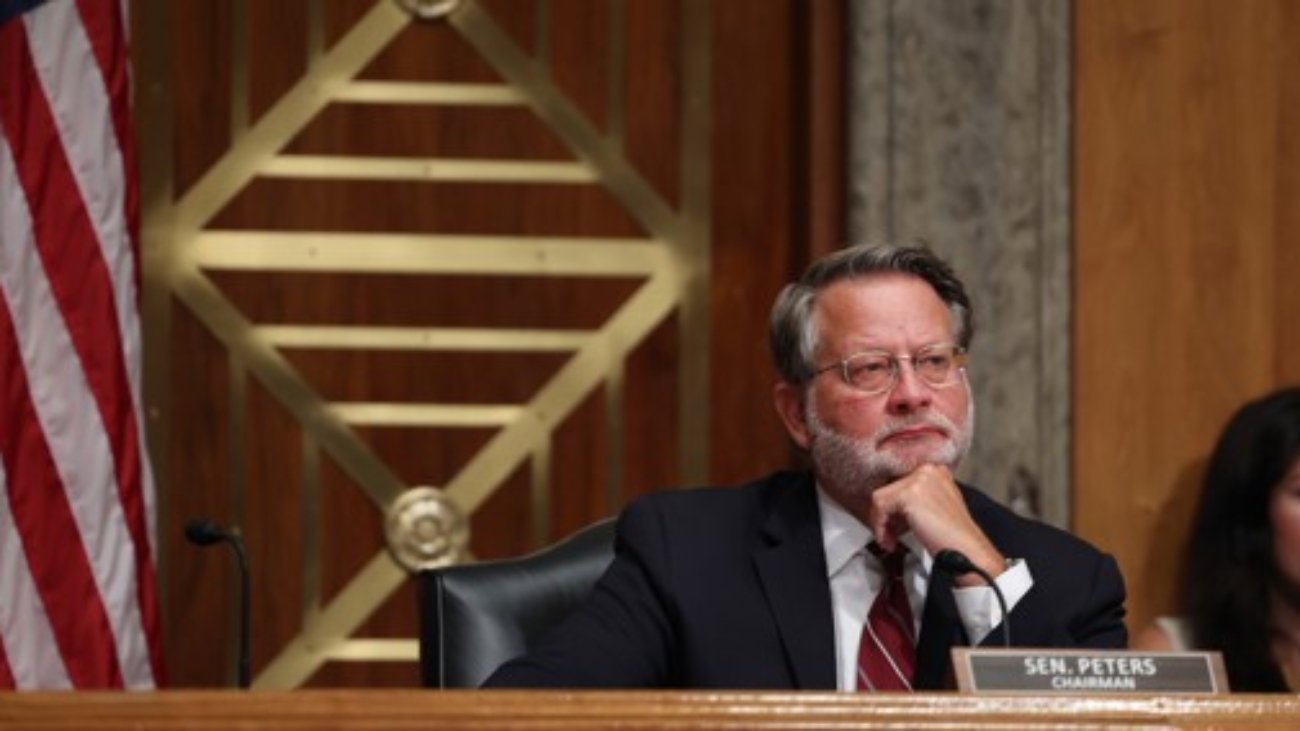
Amid the ongoing global competition between U.S. and China, a Senate panel debated placing new restrictions and safeguards on companies that perform work for both governments in a hearing on Tuesday, while also criticizing agencies that have not yet implemented policies that Congress has already passed to address the issue. 

“It goes without saying that major U.S.-based technology service providers working for foreign adversaries while performing multibillion-dollar contracts for the U.S. government risks exposing vulnerabilities that can be exploited by our adversaries,” said Senate Homeland Security and Governmental Affairs Committee Chairman Gary Peters, D-Mich. “We can and must stop this.”

Peters pointed to 2023 cyber espionage campaigns by China that breached several government email accounts partly through a flaw in Microsoft’s cloud-computing environment. 

“This attack has raised serious concerns that China-backed hackers were able to steal this information because of [Microsoft’s] partnership with a Chinese entity, while they were providing services to the U.S. government at exactly the same time,” Peters said. 

He also brought up reports that consulting firm McKinsey & Co. advised Chinese state-run enterprises while also contracting with the Defense Department. 

That incident is one reason why Sen. Josh Hawley, R-Mo., introduced legislation to prohibit federal consulting contracts from going to an organization that provides consulting services to the governments of China, Russia or any country that the Secretary of State determines has repeatedly provided support for acts of international terrorism. 

The Senate Homeland Security and Governmental Affairs panel advanced Hawley’s measure back in May in a 10-1 vote. The lone “no” vote came from ranking member Rand Paul, R-Ky., who criticized the purpose of Tuesday’s hearing. 

“People worry that contractors who work for the Chinese government will be influenced by Chinese communism. It’s also that the reverse may be true — that American contractors contracting for the Chinese government may be bringing in influence from America and from American capitalism, as well,” he said. 

Bryan Riley of the National Taxpayers Union testified that Hawley’s bill represents a “slippery slope.” 

“This legislation, in particular, does not appear to require a demonstration of a specific national security threat resulting from covered transactions,” he said. “It is simply — you provide a service to the Chinese government, you get banned here.” 

Unimplemented laws 

The Government Accountability Office last week reported that the federal government has missed deadlines to put into effect three out of five laws or provisions regarding conflicts of interest in contracting: 

  • The Defense Department has not followed a provision in the fiscal 2020 National Defense Authorization Act directing it to improve its procedures for assessing the risk of foreign ownership, control or influence for defense contracts and subcontracts that are more than $5 million. DOD officials told GAO that they are still in the earliest stages of the rulemaking. 
  • DOD has not revised the Defense Federal Acquisition Regulation Supplement, in accordance with the fiscal 2024 NDAA, to prohibit the department from entering consulting contracts with vendors that provide such services to China and other certain foreign entities, unless the company maintains a conflict of interest mitigation plan that can be audited or a waiver is issued. The Defense Acquisition Regulations Council is currently working on an interim rule to promulgate the requirement. 
  • The Federal Acquisition Regulatory Council has not implemented requirements in a 2022 law to update the Federal Acquisition Regulation with definitions, guidance and examples for contractor relationships with foreign entities that could cause conflicts of interest involving undue influence. Officials from the Office of Federal Procurement Policy, the administrator of which chairs FARC, said to investigators that the update is “complex and has required more time than normal to address.” 

Regarding the 2022 law, Peters, who sponsored the legislation, during Tuesday’s hearing criticized FARC for delaying implementation of the measure’s requirements. Jessica Tillipman, the associate dean for Government Procurement Law Studies at George Washington University, testified that, until the law is implemented, agencies will continue to use “uneven” practices for gauging contractor conflicts of interest. 

“[E]ach agency is basically left on their own to come up with their own approach to organizational conflicts of interest, which has led to severe inconsistencies among agency approaches,” she said. “Moreover, given the failure of [FARC] to update the FAR in several decades, we have outdated definitions and guidance that have not appropriately captured the many risks that continue to grow and create more conflicts of interest ranging from the security concerns we’re talking about here to commercial conflicts of interest to even the risks associated with emerging technology.”

DOD and OMB agreed with GAO recommendations to set milestones in order to carry out the unimplemented laws in as timely a manner as possible, with the watchdog stressing the need for expediency in their action. 

“Without DOD and the Office of Management and Budget’s [OFPP] establishing milestones for completing the necessary and legally required steps to ensure these laws are implemented as expeditiously as possible, acquisition officials will continue to lack the knowledge that could help protect U.S. national security when awarding contracts to consultants,” the authors of the GAO report wrote. 

With respect to the two contracting conflict of interest laws that have been implemented, government officials told GAO that they are not aware of any foreign influence risks that have been identified as a result of their applications.  

DOD enacted a provision in the fiscal 2022 NDAA requiring contractors to disclose whether they have employees who will work in China on contracts worth more than $5 million, and agencies like DOD and the Homeland Security Department have implemented a 2022 law mandating a risk-based approach when assessing small businesses seeking certain research and technology awards. 

Federal agencies between fiscal years 2019 and 2023 spent more than $500 billion on contracts for consulting services. DOD and the Homeland Security Department accounted for more than half of that amount.

gao-finds-inconsistencies-in-contractor-performance-reporting-compliance

GAO Finds Inconsistencies in Contractor Performance Reporting Compliance

Federal agencies are required to report contractor performance and conduct in the Federal Awardee Performance and Integrity Information System, or FAPIIS, but some departments were found inconsistent in complying with the reporting obligation, the Government Accountability Office said.

An assessment focused on fiscal years 2019 to 2023 revealed that some agency personnel did not know or understand their reporting requirements, which were established to inform future contract award decisions, according to a GAO report published on Wednesday.

The government watchdog found that over the five-year period, 335 contract terminations and 52 administrative agreements were reported in other sources but not in FAPIIS, a database that provides information on previous government work of contractors.

The GAO study focused on the Departments of Defense, Energy, Health and Human Services, and Veterans Affairs and the General Services Administration.

The DOD said it had limited insight into why contractor integrity records were not reported in FAPIIS while the GSA pointed to gaps in its guidance and limited awareness of reporting requirements among personnel as reasons for underreporting.

Other agencies, meanwhile, cited various reasons for not reporting terminations and have since addressed them.

GAO made recommendations to resolve the issue, including directing the administrator of the Office of Management and Budget’s Office of Federal Procurement Policy to reiterate integrity reporting requirements and identify available resources to help ensure that agency personnel have the guidance needed to comprehensively report and verify the accuracy of integrity information.

federal-workers-will-see-the-largest-increase-to-their-health-care-premiums-in-recent-memory-next-year

Federal workers will see the largest increase to their health care premiums in recent memory next year

Federal employees and retirees will pay an average of 13.5% for more on their health care premiums in 2025, a figure that is nearly double last year’s increase and marks the largest price hike in recent memory.

The government’s share of Federal Employees Health Benefits Program premiums will increase by an average of 10.01%, bringing the overall premium increase to 11.2%. In 2024, civilian federal employees were estimated to pay an average of 7.7.% more on premiums than the previous year, a slight decrease from the 8.7% rate hike in 2023, the largest the program had seen in a decade.

On average, federal workers enrolled in “self-only” plans will pay an additional $16.24 per biweekly pay period, while feds in “self plus one” insurance plans will pay $33.73 more per pay period. Employees enrolled in family coverage will pay an average of $26.10 more per pay period next year.

Under the Federal Employees Dental and Vision Insurance Program, the average premium for dental plans will increase by 2.97%, while vision plans will increase by an average of 0.87%.

2025 marks the first year of the Postal Service Health Benefits Program, which replaces the U.S. Postal Service’s previous health insurance offerings—as well as the mandate to prefund future retirees’ health benefits. As part of the shift to the new program, USPS employees will see their portions of premiums increase by an average of 11.1% next year, while the government’s portion will increase by 5.1% on average.

On a biweekly pay period basis, Postal Service workers enrolled in “self-only” plans will see their premiums increase by $10.04 in 2025, while those in “self plus one” plans will increase $29.93 on average per pay period. USPS employees enrolled in family insurance coverage will see their premiums increase by $30.68 on average next year.

The FEHBP and PSHBP’s annual open season, in which federal and postal employees can choose from a variety of regional and national insurance carriers and coverage plans, will run from Nov. 11 through Dec. 9. Among the drivers of this year’s premium increases are price increases from both providers and suppliers, increased use of some prescription drugs and increased behavioral health spending.

OPM and the White House on Wednesday announced that beginning next year, multiple national—and often several regional—FEHBP and PSHBP insurance carriers offer comprehensive IVF coverage to the tune of $25,000 or more. Also new in 2025 are requirements that all FEHB carriers cover at least GLP-1 class anti-obesity drug, such as Ozempic or Wegovy, for weight loss treatments, alongside two additional oral anti-obesity drugs. Carriers must also offer “comprehensive behavioral therapy,” including diet and exercise regimens, to those prescribed those drugs.

Wednesday’s announcement that OPM had negotiated expanded fertility coverage came as welcome news to federal employee groups and Democrats in Congress, who have been lobbying for expanded access to IVF after the Alabama Supreme Court briefly banned the treatment last spring.

“I applaud the Biden-Harris administration for taking this decisive action that I’ve called for to ensure all federal employees have access to IVF coverage—because everyone deserves the ability to access the fertility treatment they need to build their families, no matter where they live,” said Sen. Tammy Duckworth, D-Ill. “While this is welcome news, any future president could reverse this decision—so it’s critical we permanently protect and expand access to IVF nationwide and ensure no patient or doctor is criminalized simply for trying to start or grow their family.”

“In 2025, every FEHB enrollee, regardless of where they live and work, will be able to choose from multiple nationwide plans that offer comprehensive IVF coverage,” said Rep. Gerry Connolly, D-Va. “Additionally, every FEHB plan will be required to cover the prescription drugs required for three cycles of IVF annually, ensuring every enrollee in the country is able to choose a plan with fertility coverage. Providing federal employees with options to start and grow their families will in turn help the government recruit and retain the federal workforce of the future.”

Stacey Young, president of the Department of Justice Gender Equality Network, an employee association made up of nearly 2,000 employees at the Justice Department that has been on the forefront of lobbying OPM to require additional fertility coverage from insurers, said 2025’s additions will help retain a highly qualified and diverse workforce.

“President Biden, Vice President Harris, and OPM have again shown their commitment to federal employees’ reproductive healthcare needs,” she said. “Many DOJ GEN members, like countless workers across the federal government, have endured hardships without adequate IVF coverage. We expect that the expansion of access in 2025 will provide many more of our nation’s public servants with the ability to grow their families, and to do so without extreme financial struggles.”

But the rate increase is a bitter pill to swallow for other employee groups, particularly given the 2% average pay raise feds are slated to receive in January.

“This is the highest health insurance premium increase in more than two decades and will stretch employees’ paychecks beyond what they can afford,” said Doreen Greenwald, national president of the National Treasury Employees Union. “I call on President Biden and Congress to take immediate action on providing federal employees with an average 7.4% increase as called for by the FAIR Act.”

William Shackelford, national president of the National Active and Retired Federal Employees Association, urged federal employees and retirees to look closely at their coverage options during this year’s open season.

“These increases are unwelcome news that will no doubt cause sticker shock for federal and postal employees and retirees across the country,” he said. “But that sticker price may not be what you pay if you compare plans and shop for a more affordable alternative. All FEHB and PSHB plans offer comprehensive coverage, so it’s difficult to make a bad choice. But you can leave money on the table if you don’t compare costs and options.”

chenega-&-cybersheath-pass-jvsa-validation-with-perfect-score

Chenega & CyberSheath Pass JVSA Validation With Perfect Score

Chenega Corporation has collaborated with CyberSheath to pass a Joint Surveillance Voluntary Assessment—or JSVA—validation with a perfect score of 110.

To successfully pass the JSVA, Chenega used CyberSheath’s fully managed federal enclave, which ultimately aligned with NIST 800-171 protocols needed for protecting controlled unclassified information within the defense supply chain, the Reston, Virginia-based company announced Monday.

Eric Noonan, CEO of CyberSheath Services International, said, “Our federal enclave solution is designed to take the complexity out of compliance for our clients.”

“Chenega’s perfect JSVA score demonstrates the effectiveness of our approach in ensuring CMMC readiness and maintaining ongoing compliance with the DOD. Chenega’s commitment to compliance before the rest of the DIB exemplifies why it has long been considered a leader in government contracting,” Noonan added.

The JVSA is a vital part of the Cybersecurity Maturity Model Certification 2.0 framework, which will begin in early 2025 and become a requirement for contracting with the Department of Defense.

Kevin Gustin, senior director of Information Security at Chenega Corporation, said the perfect JVSA score is a testament to the work the companies have done together over the past two years. 

“This success strengthens our position as a trusted partner in the federal contracting space and provides peace of mind with CMMC 2.0 implementation on the horizon,” Gustin said.

According to a study conducted by Merrill Research, contractors earned an average score of -15 against the 110 paradigm on last year’s JVSA.

the-best-dates-to-retire-in-2025

The best dates to retire in 2025

Download the Best Dates to Retire Calendar

It’s finally here! You are old enough and have enough service to retire. You have also determined that you can afford to retire! Now, all that is left to determine is the best date to retire. This is item #2 in Section B of the retirement application. All you have to do is insert your date of final separation… also known as your retirement date! 

Voluntary (CSRS, CSRS Offset, and FERS) retirement benefits commence the first day of the month after you separate from service if you have met the age and service requirements.  Of course, the last day of each month is seldom at the end of the week, or the end of a leave period for that matter, but regardless of which day of the week the last day of the month falls on, you will receive credit for each day through close of business of the day you make your retirement effective (even if it is a holiday).   

Example: James is planning to retire on Sat., May 31, 2026 (or Fri., May 30, 2026), after 24 years of service at age 60. This is the end of leave period 10. Although James will reach his 60th birthday on May 14, he will wait to retire until the last day of May so that he will receive his salary through May 31. His retirement won’t commence until June 1 regardless of whether he retires on May 14 or May 31. James will be paid his full biweekly salary for leave period 10 and he will accrue his final leave accrual for this period (8 hours of annual leave and 4 hours of sick leave). His first monthly retirement benefit payment will be for the month of June with the payment due on July 1.   

Here is a calendar to help you plan your best date for 2025 retirement.

army-opting-for-more-agile-approach-to-software-procurement

Army Opting for More Agile Approach to Software Procurement

The U.S. Army is working to apply agile principles not only to software development but also to its software acquisition process, citing the need for a contract vehicle that could enable it to procure software offerings from industry, Federal News Network reported Wednesday.

Doug Bush, assistant secretary of the Army for acquisition, logistics and technology, highlighted the need for a contract vehicle that could help the service branch speed up the award process.

“The first goal is speed. Having a vehicle established will allow us to go faster on task orders than doing a de-novo contract in every case, which I think is better for industry,” Bush said.

“What we’ve seen without this approach is that all of our program executive offices have to do their own separate competitions for different software development, each a little bit different way, and it’s just — we hope — more efficient to have a vehicle they can use to go faster,” he added.

According to FNN, the Army is developing a request for proposals for a potential 10-year, $1 billion indefinite-delivery/indefinite-quantity contract for software procurement with contract types determined at the task order level.

“Every contract needs to be tailored to the task, and it’s not a simple world of cost-plus versus fixed-price,” Bush noted.