
usps-delays-reforms-and-promises-a-smooth-election-mail-service

USPS delays reforms and promises a smooth election-mail service

The U.S. Postal Service is confident it can once again deliver election mail in a timely manner despite increased delays in many parts of the country, seeking to assuage lawmaker concerns by promising to delay its reform efforts until after Nov. 5. 

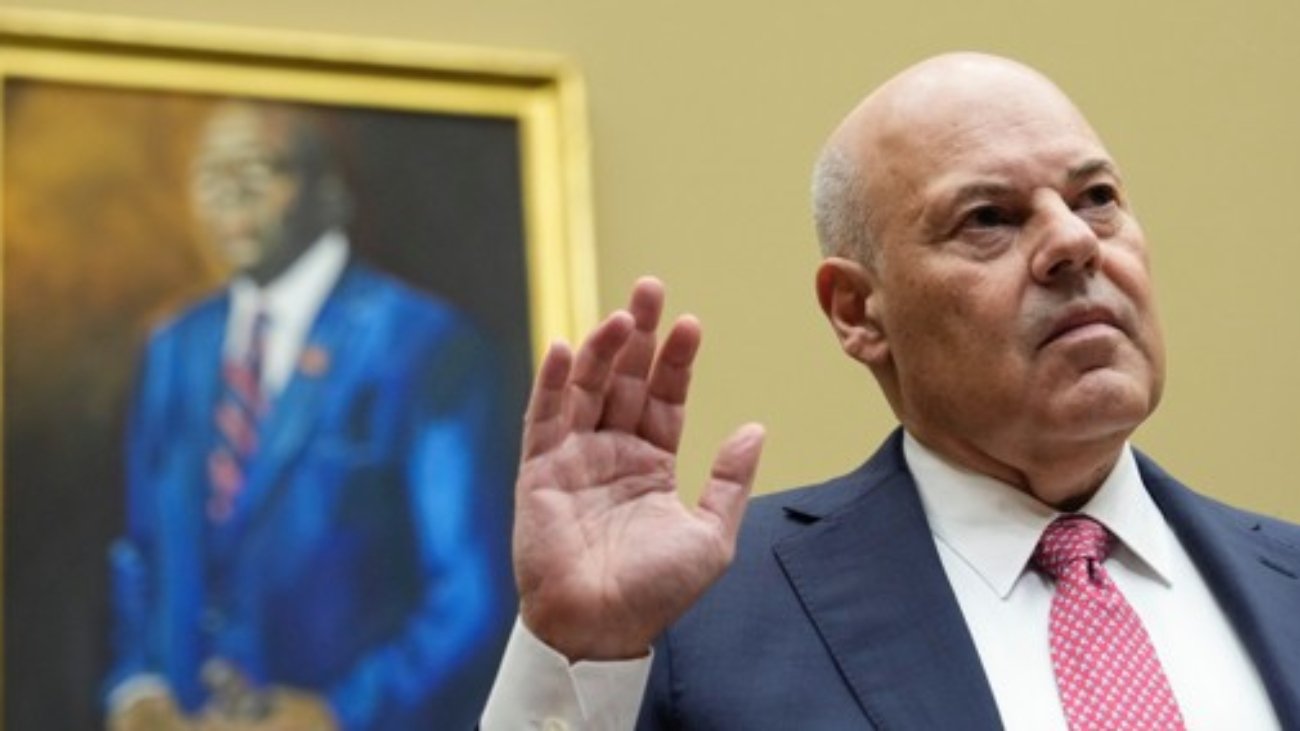
USPS will again institute “extraordinary measures” to ensure ballots are sent out and returned quickly, Postmaster General Louis DeJoy told a panel of the House Appropriations Committee on Thursday, which include special actions agency employees must take to identify and expedite ballot delivery.

The measures will begin Oct. 21 and consist of extra deliveries and collections, special pickups, expanded hours at processing plants, Sunday collections and visual checks of various points for ballots. USPS is also conducting daily sweeps at its facilities for ballots and ensuring postmarks for any piece of mail identified as a ballot. 

“We will ensure that all necessary resources are available so that we can successfully fulfill our role in delivering the mail when election officials and voters choose to use our services as part of their election process,” DeJoy said, adding USPS has established a “robust and tested process.” 

So far, DeJoy said, postal employees are executing “fairly well” on its election plan, though he acknowledged the agency has improvements to make. A recent inspector general report found USPS overwhelmingly delivered political and election mail on time during the 2024 primary season, but said some workers failed to conduct key procedures such as performing “all clear” checks for ballots each day. The IG further found DeJoy’s signature Delivering for America plan to stabilize USPS operations and finances threatened the Postal Service’s election performance. 

DeJoy said on Thursday he would pause the rolling out of his “optimized collection plan” that requires mail to sit overnight at post offices instead of being collected each evening for transportation to a processing center beginning Oct. 1 and continuing through the election. The sites that have already implemented the new collection schedules will receive extra transportation for ballots specifically starting Oct. 21. DeJoy previously announced that most of his processing plant consolidation efforts not already underway would be paused until at least Jan. 1, 2025. 

The postmaster general said that even something as routine as maintenance on a machine would not take place in the run-up to the election without his direct sign-off. 

He is taking those steps, he said, “not necessarily because it’s going to impact the mail, but because we’re trying to to calm everybody down.” 

DeJoy acknowledged many of the initial rollouts of his changes have not gone smoothly, with on-time mail delivery plummeting in many of the areas that have piloted the reforms. He stressed that was not unexpected—noting “the first rockets that went to the moon blew up”—and promised the issues would not affect ballot delivery. 

“None of the modernizing or network rationalizing actions we have taken, or are in the process of taking, will impact our successful delivery of election mail, and any, in any event, any changes that could have a potential or perceived impact are being paused or delayed until after the election or until 2025,” he said. 

USPS recently announced, as has been requested by dozens of lawmakers on both sides of the aisle, that it would seek an advisory opinion for its changes from the Postal Regulatory Commission. It will ask the regulators to weigh in on the consolidation plan, the new collection schedule and proposed changes to its service standards to allow for the slower delivery of mail. 

The latter proposal is likely to draw significant, bipartisan pushback, though it would not go into effect until after the election. The PRC previously called on USPS to pause DeJoy’s reform efforts, noting the agency in 2023 missed many of its performance, customer service and safe workplace goals. 

DeJoy’s announcement that he would pause any reform efforts until after the election came as local election officials in all 50 states earlier this month voiced concern in a letter to the postmaster general that his agency’s failures threatened prompt and thorough election mail delivery.

Postal employees are not properly trained, more election mail is being delivered late with some states receiving hundreds of ballots 10 or more days after postmark and ballots are increasingly being returned as undeliverable, the National Association of Secretaries of State and the National Association of State Election Directors said in their joint letter.   

DeJoy told committee members he has since reached out to the election officials and held meetings with his own election mail teams to address concerns. He and his executive team are meeting twice per week on election matters and are going through all of the complaints. DeJoy stood up an Election and Government Mail Services team in 2021 that meets year-round and has held 47 outreach events in 2024. DeJoy noted he also holds weekly meetings with the inspector general. 

Rep. Mark Pocan, D-Wis., sharply criticized DeJoy during the hearing for his reform efforts and the impact they have had in his home state. He said he was “heartened” that the postmaster general is pausing further changes until after the election and said he was pleased the “extraordinary measures” would be instituted as previous efforts around the election proved effective. Despite some disruptions, due in part to the COVID-19 pandemic and DeJoy’s prior reform efforts, USPS largely executed successful delivery efforts during the 2020 and 2022 elections when voting by mail increased significantly. 

Rep. Dave Joyce, R-Ohio, who chairs the subcommittee that hosted DeJoy on Thursday, said he held the hearing so the postmaster general would understand “clearly that it’s a very deep concern among us.”

dod-seeks-feedback-on-proposed-rule-on-cost,-pricing-data-requirements

DOD Seeks Feedback on Proposed Rule on Cost, Pricing Data Requirements

The Department of Defense has proposed a rule to apply sections of the National Defense Authorization Acts for fiscal years 2018, 2021 and 2022 to effectively update the cost or pricing data submission requirements for contractors.

According to a Federal Register notice published Thursday, DOD proposed the rule as an amendment to the Defense Federal Acquisition Regulation Supplement.

Upon the request of a contracting officer, a section in the FY 2018 NDAA requires offerors to submit data other than certified cost or pricing data.

A section of the FY 2021 NDAA sets a $2 million threshold for TINA requirements, also known as the Truthful Cost or Pricing Data statute, regarding modifications to contracts or subcontracts.

Meanwhile, a section in the FY 2022 defense authorization measure directs contracting officers to modify contracts to reflect the relevant TINA threshold as necessary.

According to DOD, the proposed rule will help foster efficiency and reduce costs related to administering contracts by implementing a uniform TINA threshold and provide government contracting officers with the ability to collect data other than certified pricing or cost data for contract modifications.

The department also noted that raising the TINA threshold for subcontracts and contract modifications could benefit small businesses by reducing the overall number of contracts to which TINA requirements apply.

Comments on the proposed rule are due Nov. 25.

fbi’s-carahsoft-raid-comes-amid-allegations-of-price-fixing

FBI’s Carahsoft raid comes amid allegations of price-fixing

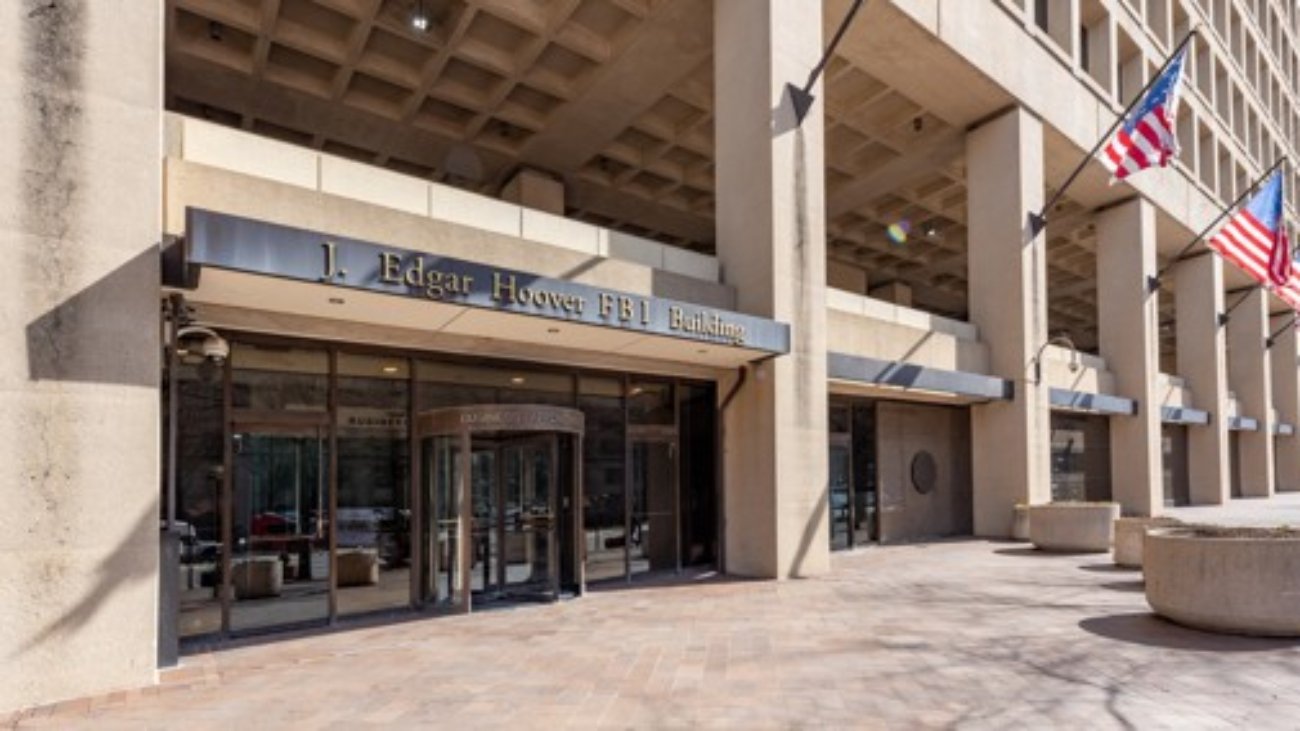
The FBI and Defense Criminal Investigative Service launched a joint raid Tuesday morning at Carahsoft’s Reston, Va., headquarters. Law enforcement officials confirmed the raid but have yet to share details on what prompted the seizure of company records.

“We can confirm that DCIS executed a joint search warrant operation with the FBI in northern Virginia yesterday morning. We have nothing further to add, as this is an open investigation,” a spokesperson for the Defense Department’s audit office said in a statement. 

Richard Conway, an attorney for Carahsoft, did not return a request for comment. A company spokesperson also did not comment on the new details of the raid.

News of the raid prompted speculation about possible — but thus far unsubstantiated — links to an ongoing court case that was filed in the U.S. District Court for the District of Maryland last year and involved efforts to defraud government agencies. The names of the vendors allegedly involved in the scheme were redacted. A report in Bloomberg, citing an unredacted filing, named SAP and noted that prosecutors were also examining other resellers and a unit of Accenture. 

Both companies issued statements to Nextgov/FCW indicating they were cooperating with the Justice Department in a civil investigation. 

Carahsoft employees were told Tuesday the raid was “part of an investigation into a company with which Carahsoft has done business in the past” and that the company is fully cooperating and “operating business as usual,” according to an email sent by Carahsoft President Craig Abod and obtained by Nextgov/FCW.

Carahsoft is a leading IT vendor and reseller of technology products and services to public sector organizations, with prime spots on key federal governmentwide acquisition contracts such as NASA’s Solutions for Enterprise-Wide Procurement and the General Services Administration’s Multiple Award Schedule.

The raid occurred during the busiest time of the year for federal contractors. The U.S. government’s fiscal year ends Sept. 30, where agencies have to finalize budgets, allocate remaining funds and push through last-minute contracts before the deadline.

A Carahsoft employee, speaking on the condition of anonymity for fear of retaliation, said that account representatives handling client relationships were directed by team leads to calm down vendors and assure them that there was nothing to fear.

The ongoing civil case 

Documents filed in the U.S. District Court for the District of Maryland last year indicate that the U.S. is looking into “whether Carahsoft conspired with other companies to rig bids, inflate prices, overcharge, and defraud the Department of Defense (DoD), among other federal government agencies” when it resold the products. The specific companies in question were redacted in the documents that Nextgov/FCW had retrieved.

For a year, Carahsoft “had not produced the full set of transaction records (including but not limited to the communications, solicitations, proposals, quotes, bids, award notices, orders, purchase orders, and invoices) for even a single project” for the Justice Department and others involved.

For months, frustration had mounted among DOJ lawyers, who claimed in court proceedings that the government’s document requests and inquiries appeared to be delayed or unfulfilled by Carahsoft.

“We have offered to rewrite the question, but the response we’ve gotten from Carahsoft is saying that they don’t want to answer the question,” Justice Department trial attorney Samson Asiyanbi said. “And it seems to us that they just don’t want to answer it. And rather — because they don’t want to answer it, they are coming up with all sorts of reasons why they shouldn’t be required to do so.”

Carahsoft paid a $75 million fine to the government in 2015 to settle claims that the company and partner firm VMWare overcharged the government and concealed commercial pricing arrangements. Carahsoft did not admit wrongdoing in the settlement.

GovExec’s Frank Konkel and Washington Technology’s Nick Wakeman and Ross Wilkers contributed to this report.

Editor’s note: Carahsoft is an advertising client of GovExec360.

congress-cleared-cr-to-extend-federal-funding-for-3-months

Congress-Cleared CR to Extend Federal Funding for 3 Months

A stopgap funding measure is now headed to the White House for President Joe Biden’s signature after Congress passed the bill to avert a government shutdown and extend federal funding through December, Breaking Defense reported Wednesday.

The Senate passed the continuing resolution in a 78-18 vote two hours after the House voted 341-82 to approve the legislation.

The CR, which seeks to extend federal funding through Dec. 20, does not include the White House’s request for an additional $2 billion for the construction of Virginia-class submarines and the Presidential Drawdown Authority’s extension to provide military assistance to Ukraine.

According to the report, the president is expected to sign the bill into law ahead of the Sept. 30 deadline.

“The passage of this bill gives Congress more time to pass full-year funding bills by the end of this year. My Administration will work with Congress to ensure these bills deliver for America’s national defense, veterans, seniors, children, and working families, and address urgent needs for the American people, including communities recovering from disasters,” Biden said in a statement published Wednesday.

senate-bill-seeks-to-prevent-ai-bias,-discrimination

Senate Bill Seeks to Prevent AI Bias, Discrimination

Sen. Edward Markey, D-Mass., has introduced a bill that would establish guardrails on companies’ use of artificial intelligence tools and related algorithms in decisions impacting people’s civil rights, liberties and livelihoods and prevent and eliminate AI bias and discrimination.

The senator’s office said Tuesday the proposed AI Civil Rights Act would prohibit AI developers and deployers from using, licensing or offering covered algorithms that discriminate based on protected characteristics.

The legislation would direct developers and deployers of such algorithms to complete independently audited pre- and post-deployment impact assessments to mitigate any potential bias and promote transparency regarding the use of covered algorithms in consequential decisions.

I am introducing the Artificial Intelligence Civil Rights Act to ensure that the AI Age does not replicate and supercharge the bias and discrimination already prevalent in society today,” Markey said.

“Make no mistake: we can have an AI revolution in this country while also protecting the civil rights and liberties of everyday Americans, we can support innovation without supercharging bias and discrimination, and we can promote competition while safeguarding people’s rights,” added the member of the Senate Commerce, Science and Transportation Committee.

Sen. Mazie Hirono, D-Hawaii, is a co-sponsor of the measure, which would authorize the Federal Trade Commission, state attorneys general and private individuals to implement the bill’s provisions.

labor-dept-develops-framework-for-integrating-ai-into-hiring-tech

Labor Dept Develops Framework for Integrating AI Into Hiring Tech

The Department of Labor has unveiled a new framework designed to guide employers in integrating artificial intelligence into hiring technologies to reduce employment discrimination and barriers faced by disabled job seekers.

The AI & Inclusive Hiring Framework, developed by the Office of Disability Employment Policy and the Partnership on Employment & Accessible Technology, is based on the National Institute of Standards and Technology’s AI Risk Management Framework and includes NIST’s best practices for inclusive hiring, the Labor Department said Tuesday.

The document, formed with input from disability advocates, AI experts, government and industry leaders, and the public, offers information on managing AI risks and recommends practices, goals and sample activities that can be worked into the employers’ AI governance and disability-inclusive hiring initiatives. 

According to Taryn Williams, assistant secretary for disability employment policy, the framework was published with the knowledge of how AI can improve the recruitment process but impact workplace culture and inclusion of disabled employees. 

The publication aligns with the White House’s Blueprint for an AI Bill of Rights, which promotes more equitable and inclusive digital hiring practices.

spacecom-commercial-operations-cell-tasked-to-handle-tac-srt-missions

SPACECOM Commercial Operations Cell Tasked to Handle Tac-SRT Missions

According to Barbara Golf, strategic adviser for space domain awareness at the Space Systems Command, the Joint Commercial Operations cell, which she also leads, will take on tactical surveillance, reconnaissance and tracking, or Tac-SRT, missions beginning Oct. 1, Breaking Defense reported Tuesday.

Tac-SRT data will be collected by the JCO from commercial remote sensing satellite operators, Golf said at the recent Advanced Maui Optical and Space Surveillance Technologies conference.

The head of the JCO explained that the Tac-SRT work will be carried out in coordination with the intelligence community, especially the National Geospatial-Intelligence Agency, to avoid duplication of effort. The NGA collects remote sensing imagery from the National Reconnaissance Office as well as imagery analysis from commercial providers.

“We are actually collaborating with the IC. We don’t double buy. We check NGA imagery libraries first to make sure we don’t already have information. We take everything we purchase and put it back in those libraries,” Golf said.

A part of the U.S. Space Command, the JCO cell was previously called Joint Task Force-Space Defense Commercial Operations until it was renamed in December 2023. Its purpose is to provide space domain awareness. It works with NATO and 14 other countries.

johns-hopkins-apl-testing-new-software-platform-for-navy-usv-operating-systems

Johns Hopkins APL Testing New Software Platform for Navy USV Operating Systems

Researchers at the Johns Hopkins Applied Physics Laboratory are collaborating with the U.S. Navy to validate Autonomy Baseline Library, a new software developed for rapid analysis of uncrewed surface vehicles’ systems and capabilities suited for specific naval needs. 

The software tests, which were initially undertaken in the Navy’s Technology Readiness Experimentation, or T-REX, held in March, will culminate at the Autonomous Warrior joint force exercise scheduled in October in Australia, APL said Tuesday.

APL, the Naval Surface Warfare Center Combatant Craft Division, Naval Information Warfare Center Pacific and industry partners developed the ABL software under the ORCAstrate program of the Office of the Under Secretary of Defense for Research and Engineering. 

The software is compliant with the interface standards of the Navy’s Unmanned Maritime Autonomy Architecture for software modularized into reusable parts for rapid software insertion and reuse in programs across various USVs. 

“This type of open architecture allows for rapid scaling of these platforms, as well as faster capability upgrades as the technology advances,” said Toni Salter, APL’s program manager for emerging concepts. 

Navy operators used the ABL to command three global autonomous reconnaissance craft USV platforms and one common USV at the March T-REX event, which was part of the U.S. Pacific Fleet-led Integrated Battle Problem 24.1 held in San Diego.

Besides the ABL’s tests in T-REX at the Autonomous Warrior exercise in Australia, the Department of Defense will also bring its Rapid Defense Experimentation Reserve program to accelerate military technology development, Heidi Shyu, Pentagon’s chief technology officer and a 2024 Wash100 awardee, told DefenseScoop on the sidelines of the Potomac Officers Club’s annual Defense R&D Summit held in January.

state-department-working-to-remake-acquisition-process

State Department Working to Remake Acquisition Process

The State Department is advancing category management and streamlining procurement workflows as part of efforts to transform its acquisition process, Federal News Network reported Tuesday.

For the most part, most agencies are trying to buy smarter these days and use best in class vehicles that are established out there. We’re certainly doing that,” said Michael Derrios, senior procurement executive at the State Department.

But the missing ingredient for us really, and for any agency, is aggregating the demand signal. So how can you look internally at the requirements and identify those opportunities before you go to the best in class vehicles? That’s really where we get the best bang for the buck, so to speak,” he added.

According to FNN, the State Department wants its teams of procurement specialists focused on information technology and other specific procurement areas to have a deeper understanding of their respective markets and is using data analytics to manifest a view of the upcoming year’s portfolio.

Derrios, who also serves as deputy assistant secretary for acquisition, cited the need for an end-to-end platform in support of the department’s contracting officers and customers.

“I would like for us to have an end to end system where, frankly, it would be fantastic if we had a system that allowed our customers to be able to work workflow documents into a shared workspace where our [contracting officers (COs)] and our customers could actually work on documents together,” he said. “I’ll go so far as to say a secure system where industry could submit their proposals in to us. I say that with emphasis on ‘secure’ system. I would love that.”

afrl-is-exploring-ways-to-reach-more-small-businesses

AFRL Is Exploring Ways to Reach More Small Businesses

Brian McJilton, director of the Air Force Research Laboratory’s Small Business Office, said there has been a 33 percent drop in the number of small companies partnering with the Department of Defense in the past five to seven years and that his office is working to address that trend by educating such enterprises on how to collaborate with DOD, AFRL reported Monday.

“While this hasn’t impacted us significantly yet, it could in the future,” McJilton said at a recent summit held in Dayton, Ohio.

“We need to be proactive and seek innovative ways to attract and support new small businesses to ensure the supply-chain of small businesses stays strong for the future,” he added.

During the event, the AFRL official cited the importance of feedback from small businesses and the potential role of artificial intelligence tools in improving efficiency.

McJilton noted that his office is exploring ways to bolster engagement with small businesses and streamline processes and seeks to “set actionable priorities for the coming year.”

“Our goal is to invest resources effectively and connect with businesses that align with our needs,” he said. “We offer a range of tools and programs to help small businesses understand and access opportunities within AFRL.”

The AFRL office has reportedly reached over 2,000 small businesses through platforms and events since 2023 and is on track to exceed its 2023 small business performance metrics.

“We are currently ahead of last year’s small business numbers. If this trend continues, we will likely exceed last year’s figures. It’s about how much money we’re awarding to small businesses. Financially, I believe we will surpass last year’s figures easily,” McJilton stated.